
 Image 1 of 1
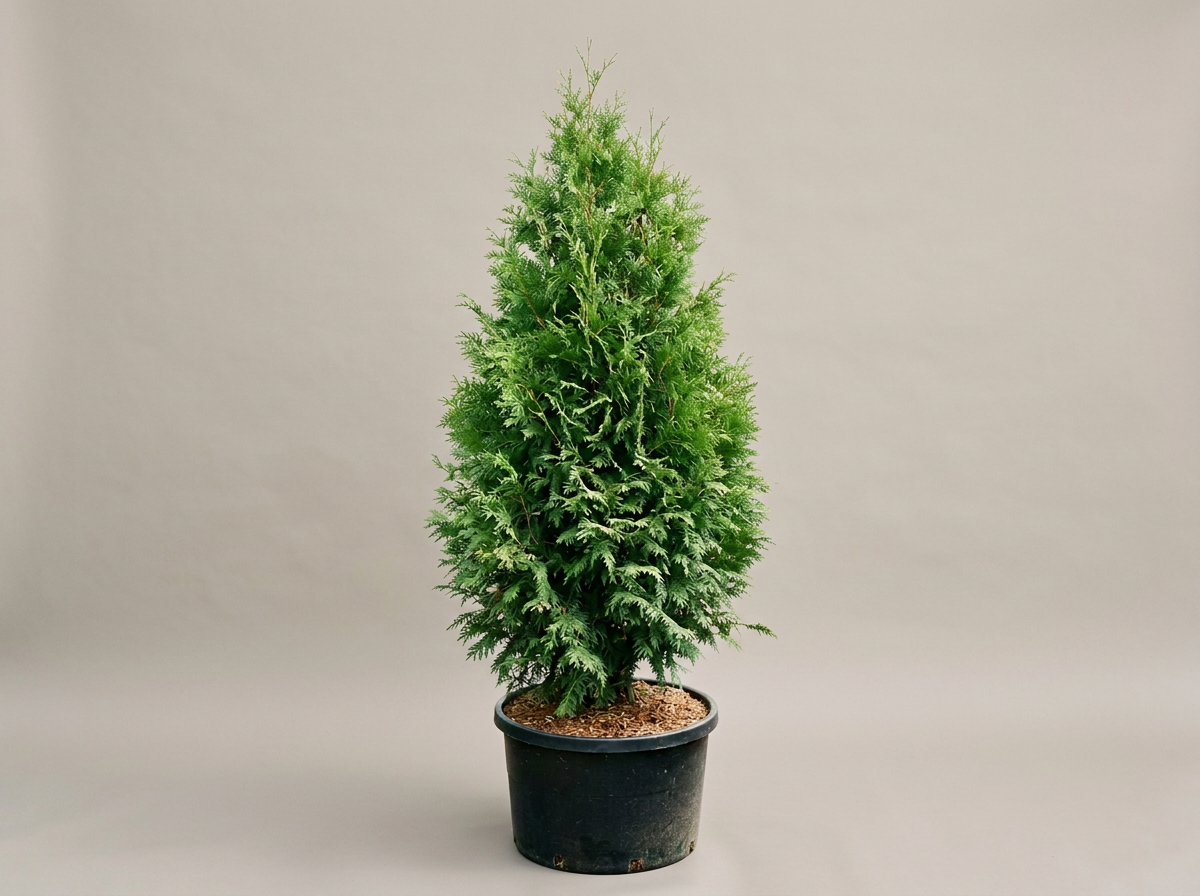
Green Giant arborvitae — Thuja standishii × plicata 'Green Giant' — is a fast-growing, pyramidal evergreen prized for its robust health, dense foliage, and elegant vertical presence. Use this copy to showcase the plant as a landscape product: characteristics, ideal growing conditions, planting instructions, and ways to enjoy it.
Product overview
Habit and size: Upright, pyramidal form that can reach 40–60 feet tall and 12–20 feet wide at maturity under ideal conditions; many home landscapes keep it trained to 20–40 feet. Growth rate is vigorous, commonly 3–5 feet per year when young.
Foliage and appearance: Soft, scale-like, glossy green foliage year-round; maintains good color in winter with minimal browning. Branches are dense and layered, creating an effective visual screen or windbreak without the harshness of conifers with prickly needles.
Hardiness and resilience: Rated for USDA zones 5–8. Excellent resistance to common arborvitae diseases and pests; tolerant of heat and humidity and less prone to winter burn than some other evergreens.
Root and soil behavior: Forms a fibrous root system that establishes quickly. Prefers well-drained soil but tolerates a range of soil textures and pH levels.
Ideal growing conditions
Light: Full sun to light shade. Best foliage density and growth rate in full sun (6+ hours daily); tolerates partial shade though growth may be slower and habit less dense.
Soil: Prefers moist, well-drained soils. Adapts to loam, sand, or clay if drainage is adequate. Slightly acidic to neutral pH is ideal but it tolerates a modest range.
Water: Requires regular watering during establishment (first 1–2 years). Once established, moderately drought tolerant but benefits from supplemental water in prolonged dry spells, especially in hot climates.
Spacing: For hedges/screens, space 5–8 feet apart for a solid screen at maturity. For specimen planting allow 12–20 feet of lateral space depending on desired final size.
Maintenance: Low-maintenance once established. Minimal pruning required to maintain shape — prune in late spring or early summer if needed. Monitor for stress in hot, dry summers or winter desiccation in exposed sites.
Planting instructions
Timing: Plant in early spring or fall when temperatures are mild and soil is workable. Avoid planting in extreme heat or during deep winter freeze.
Site preparation:
Select a site with appropriate light and space.
Remove competing turf and dig a hole 2–3 times the diameter of the root ball but no deeper than the root flare to prevent settling.
Loosen surrounding soil to encourage lateral root growth.
Planting steps:
Remove the plant from its container or burlap. If root-bound, gently tease or slice circling roots to encourage outward growth.
Place the root ball so the top of the root flare is at or slightly above finished grade.
Backfill with native soil; amend only if drainage is poor — excessive amendment can create a “pot” effect that discourages roots from leaving the backfill.
Firm soil gently to eliminate large air pockets; do not over-compact.
Green Giant arborvitae — Thuja standishii × plicata 'Green Giant' — is a fast-growing, pyramidal evergreen prized for its robust health, dense foliage, and elegant vertical presence. Use this copy to showcase the plant as a landscape product: characteristics, ideal growing conditions, planting instructions, and ways to enjoy it.
Product overview
Habit and size: Upright, pyramidal form that can reach 40–60 feet tall and 12–20 feet wide at maturity under ideal conditions; many home landscapes keep it trained to 20–40 feet. Growth rate is vigorous, commonly 3–5 feet per year when young.
Foliage and appearance: Soft, scale-like, glossy green foliage year-round; maintains good color in winter with minimal browning. Branches are dense and layered, creating an effective visual screen or windbreak without the harshness of conifers with prickly needles.
Hardiness and resilience: Rated for USDA zones 5–8. Excellent resistance to common arborvitae diseases and pests; tolerant of heat and humidity and less prone to winter burn than some other evergreens.
Root and soil behavior: Forms a fibrous root system that establishes quickly. Prefers well-drained soil but tolerates a range of soil textures and pH levels.
Ideal growing conditions
Light: Full sun to light shade. Best foliage density and growth rate in full sun (6+ hours daily); tolerates partial shade though growth may be slower and habit less dense.
Soil: Prefers moist, well-drained soils. Adapts to loam, sand, or clay if drainage is adequate. Slightly acidic to neutral pH is ideal but it tolerates a modest range.
Water: Requires regular watering during establishment (first 1–2 years). Once established, moderately drought tolerant but benefits from supplemental water in prolonged dry spells, especially in hot climates.
Spacing: For hedges/screens, space 5–8 feet apart for a solid screen at maturity. For specimen planting allow 12–20 feet of lateral space depending on desired final size.
Maintenance: Low-maintenance once established. Minimal pruning required to maintain shape — prune in late spring or early summer if needed. Monitor for stress in hot, dry summers or winter desiccation in exposed sites.
Planting instructions
Timing: Plant in early spring or fall when temperatures are mild and soil is workable. Avoid planting in extreme heat or during deep winter freeze.
Site preparation:
Select a site with appropriate light and space.
Remove competing turf and dig a hole 2–3 times the diameter of the root ball but no deeper than the root flare to prevent settling.
Loosen surrounding soil to encourage lateral root growth.
Planting steps:
Remove the plant from its container or burlap. If root-bound, gently tease or slice circling roots to encourage outward growth.
Place the root ball so the top of the root flare is at or slightly above finished grade.
Backfill with native soil; amend only if drainage is poor — excessive amendment can create a “pot” effect that discourages roots from leaving the backfill.
Firm soil gently to eliminate large air pockets; do not over-compact.